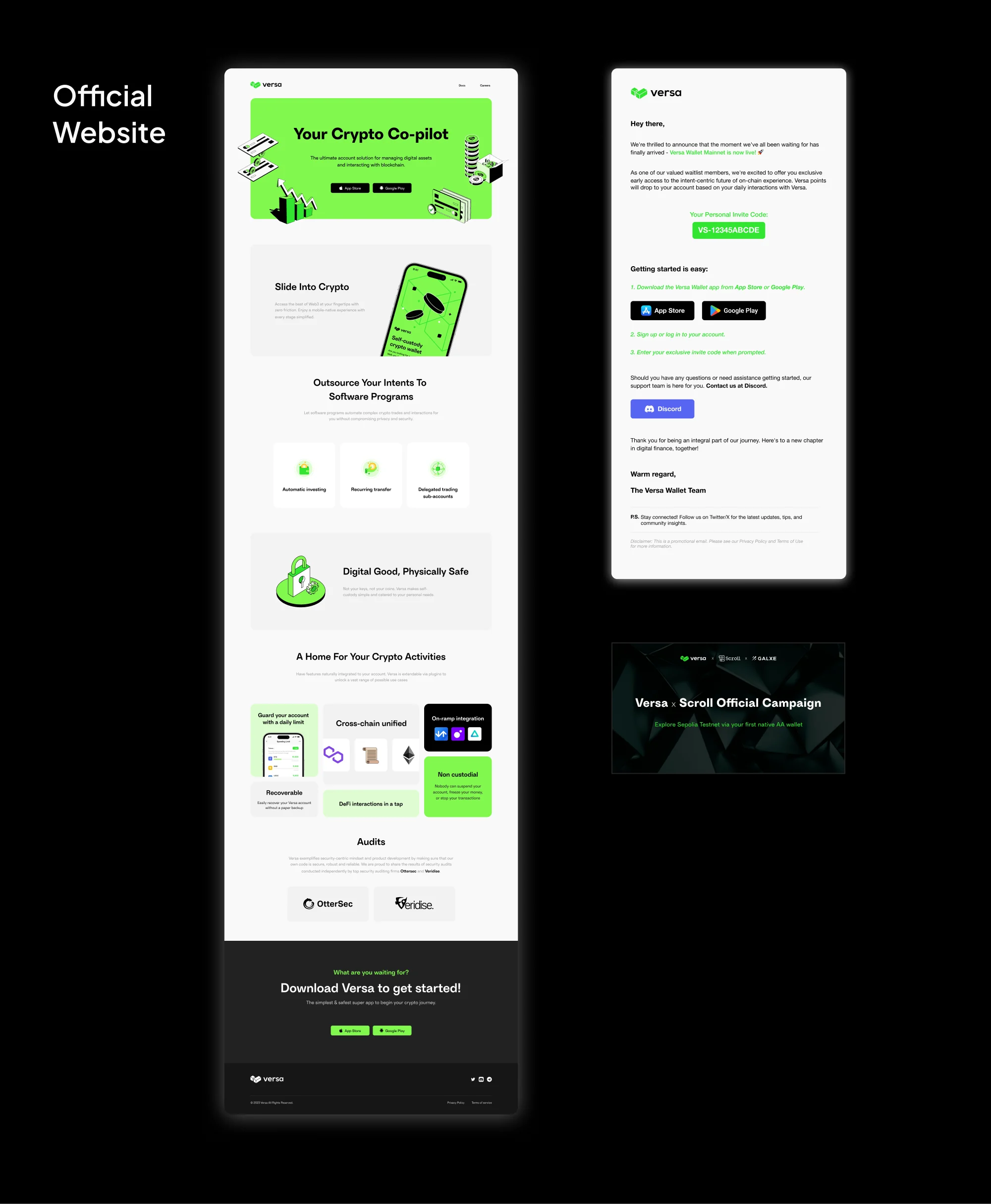
Versa Wallet — Turning Account Abstraction
into a Wallet People Understand and Trust
Overview
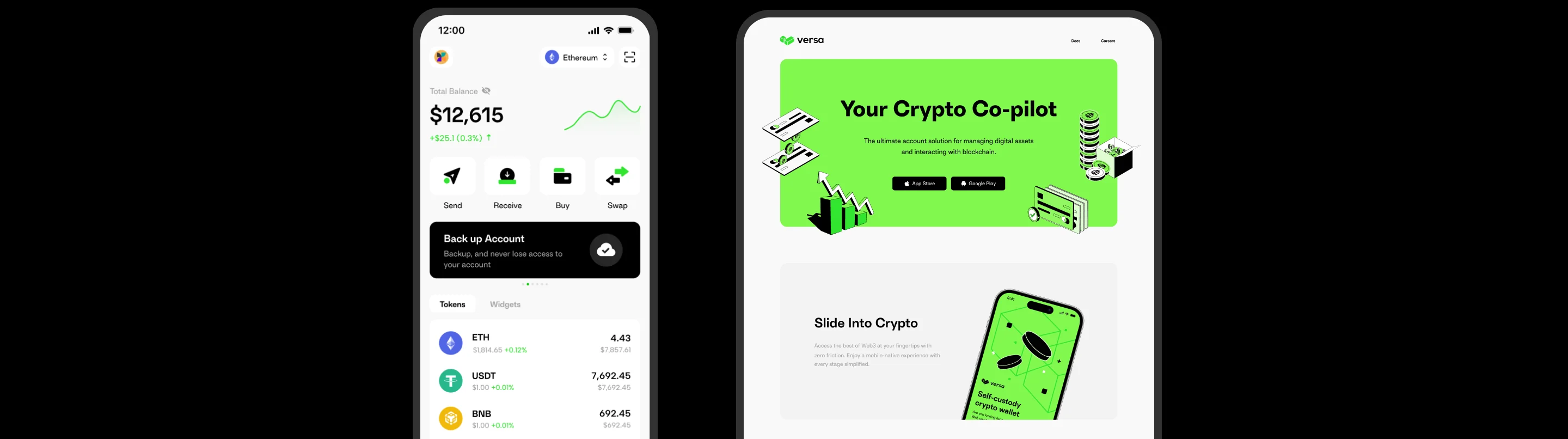
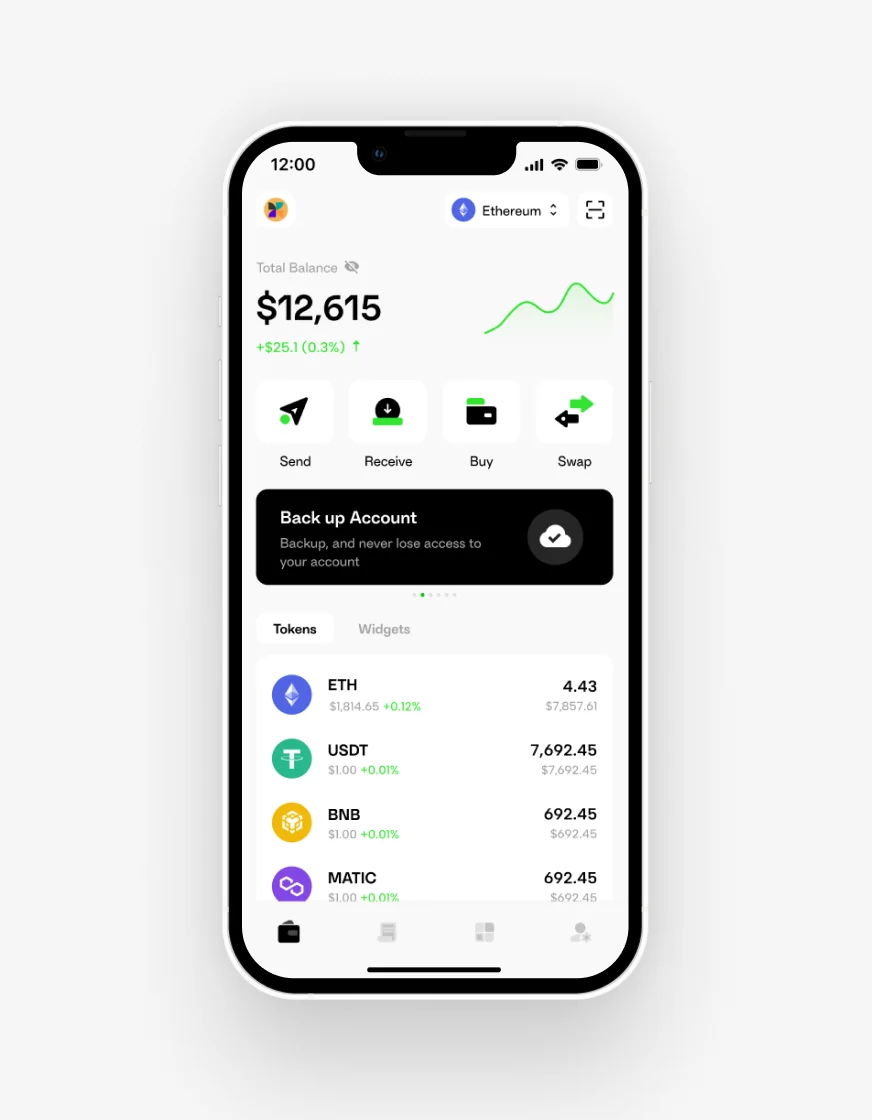
Versa is a crypto wallet built on account abstraction. There is no seed phrase: you sign up, sign in and confirm transactions with Face ID. Passkeys sync to the cloud, so a new phone is a quick restore. It supports transfers, swaps and recurring buys, and gas can be paid with Versa Points.
Key results
More new users finish creating a wallet, and first transfers no longer get stuck on gas
69%
New-user wallet creation completion (was 41%)
30 days after the beta launch
−83%
First transfers failing for lack of gas
Compared with a traditional EOA wallet flow
Highlight
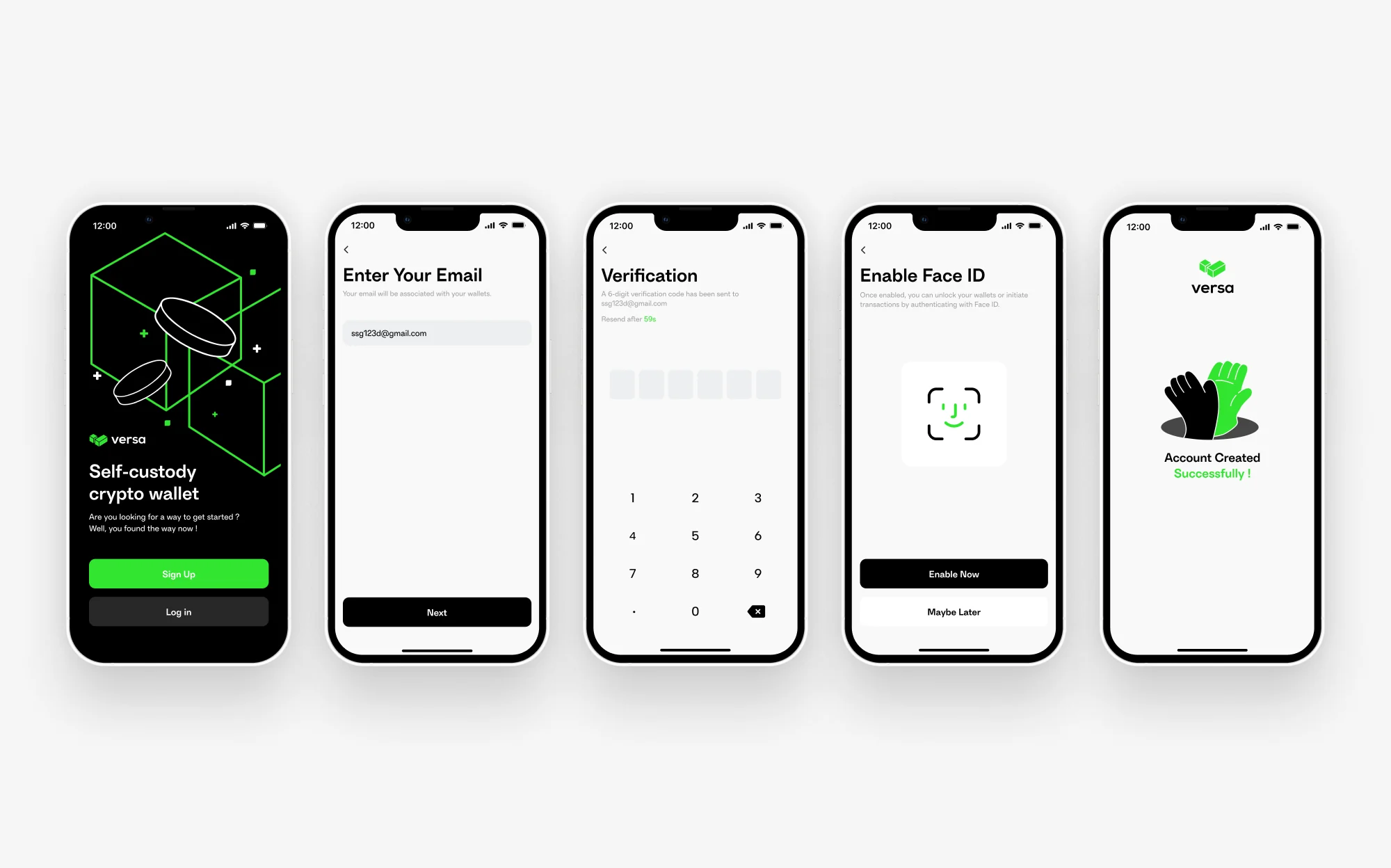
Creating a wallet
No seed phrase to write down: create an account in seconds, verified with Face ID
The main flow talks only about outcomes, never technical terms. Once sign-up is done, it explains where the key lives, how to recover it and who can move your money.
Context
The technology already makes a wallet without a seed phrase possible, but people won't trust it just because the technology changed.
Account abstraction turns a wallet from a single private key into a programmable smart-contract account. It can sign in a different way, recover in a different way, let someone else pay the gas, and even run transactions by rule while the user is away. The design job was to turn these capabilities into an experience people understand, dare to use, and know how to handle when something goes wrong.
0
Seed phrases for users to write down and keep safe
5
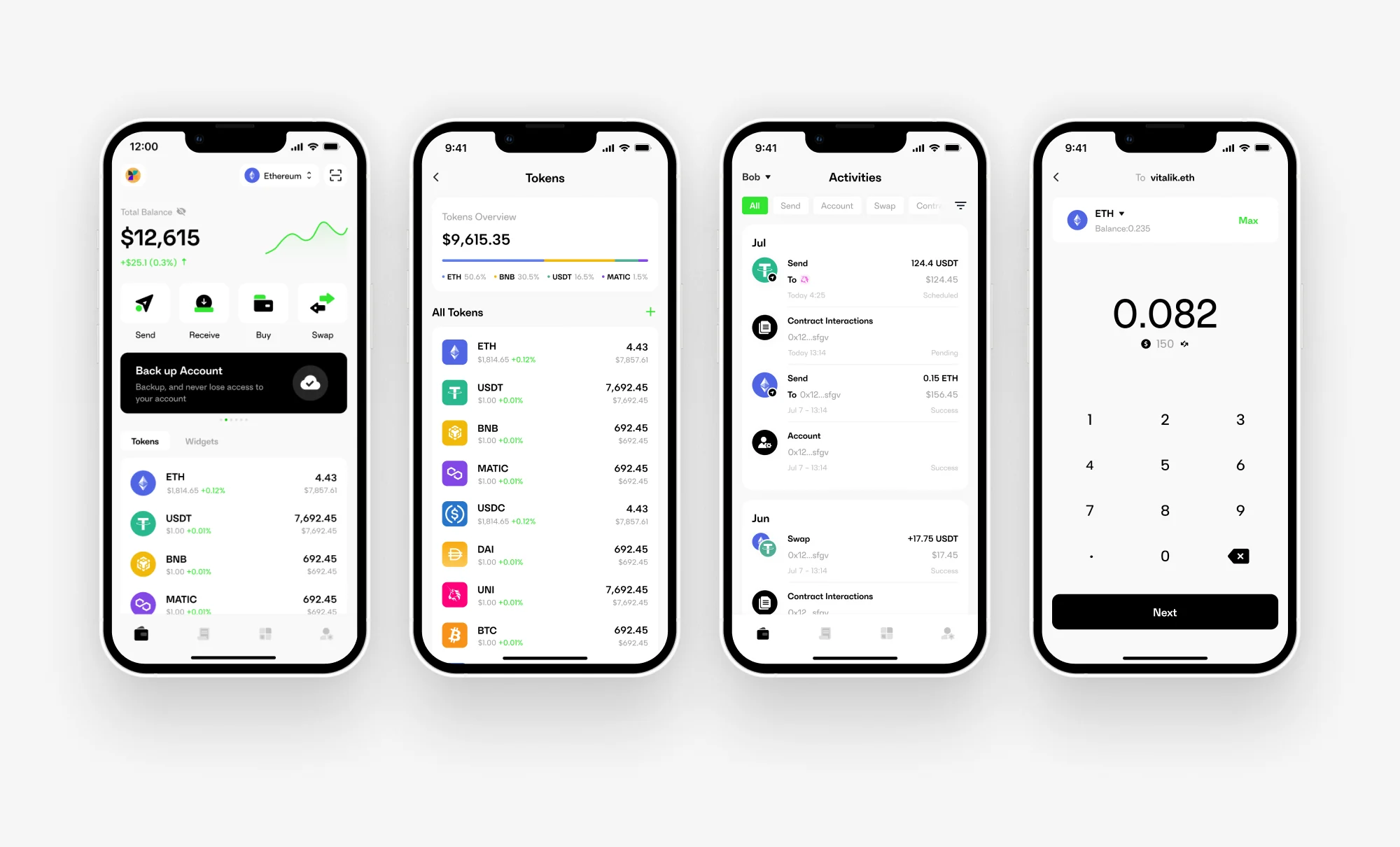
Core features: send, receive, swap, recurring transfers and auto-invest
Three hurdles of traditional wallets
New users get stuck at three moments
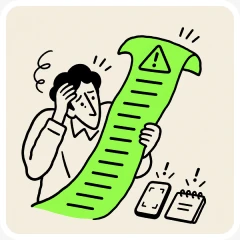
Creating a wallet
Seed-phrase warnings put users under pressure. Many give up, or save the phrase unsafely in a screenshot or a note.
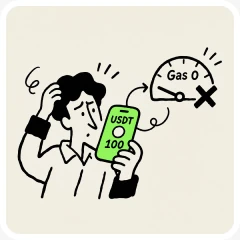
The first transfer
The wallet holds USDT but no native token, so the transaction fails for lack of gas and the user can't tell why.
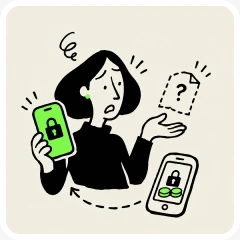
Switching devices
Without the seed phrase, the assets can't be recovered.
From hurdles to new problems
Account abstraction answers all three hurdles
Reframing the problem
Turn what account abstraction can do into an experience people understand, dare to use, and can recover from when things go wrong
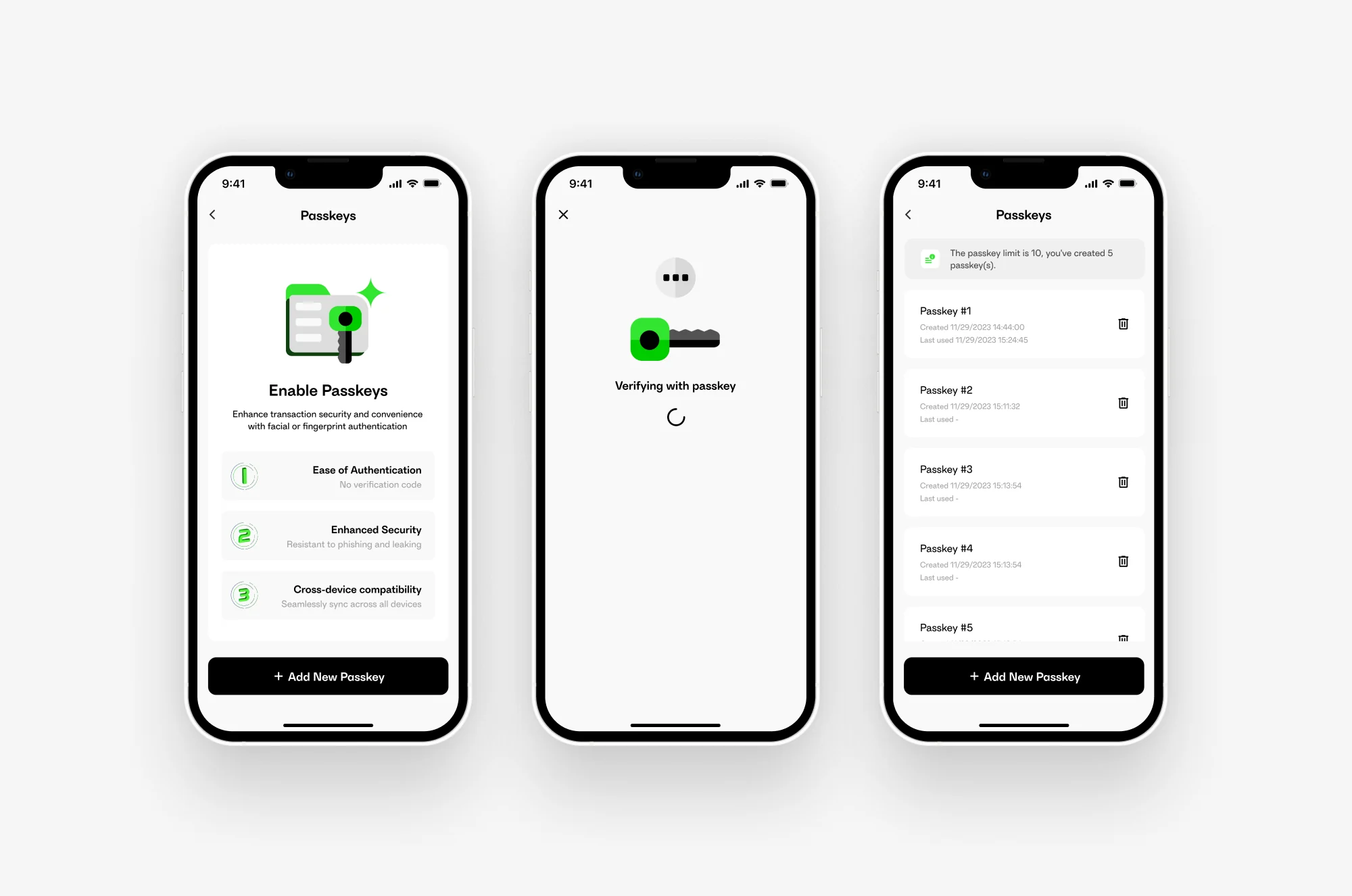
The signing key lives only on your device
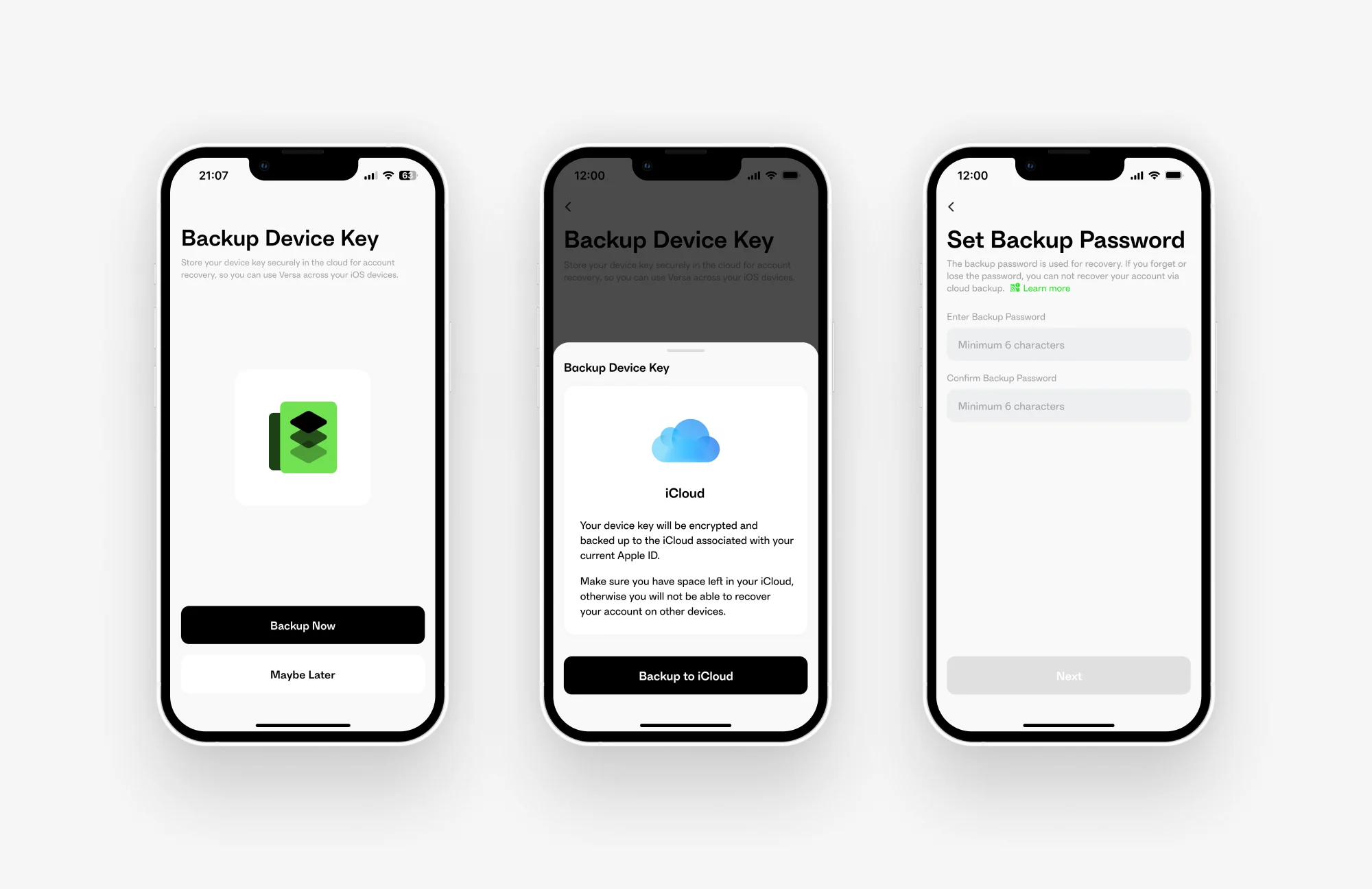
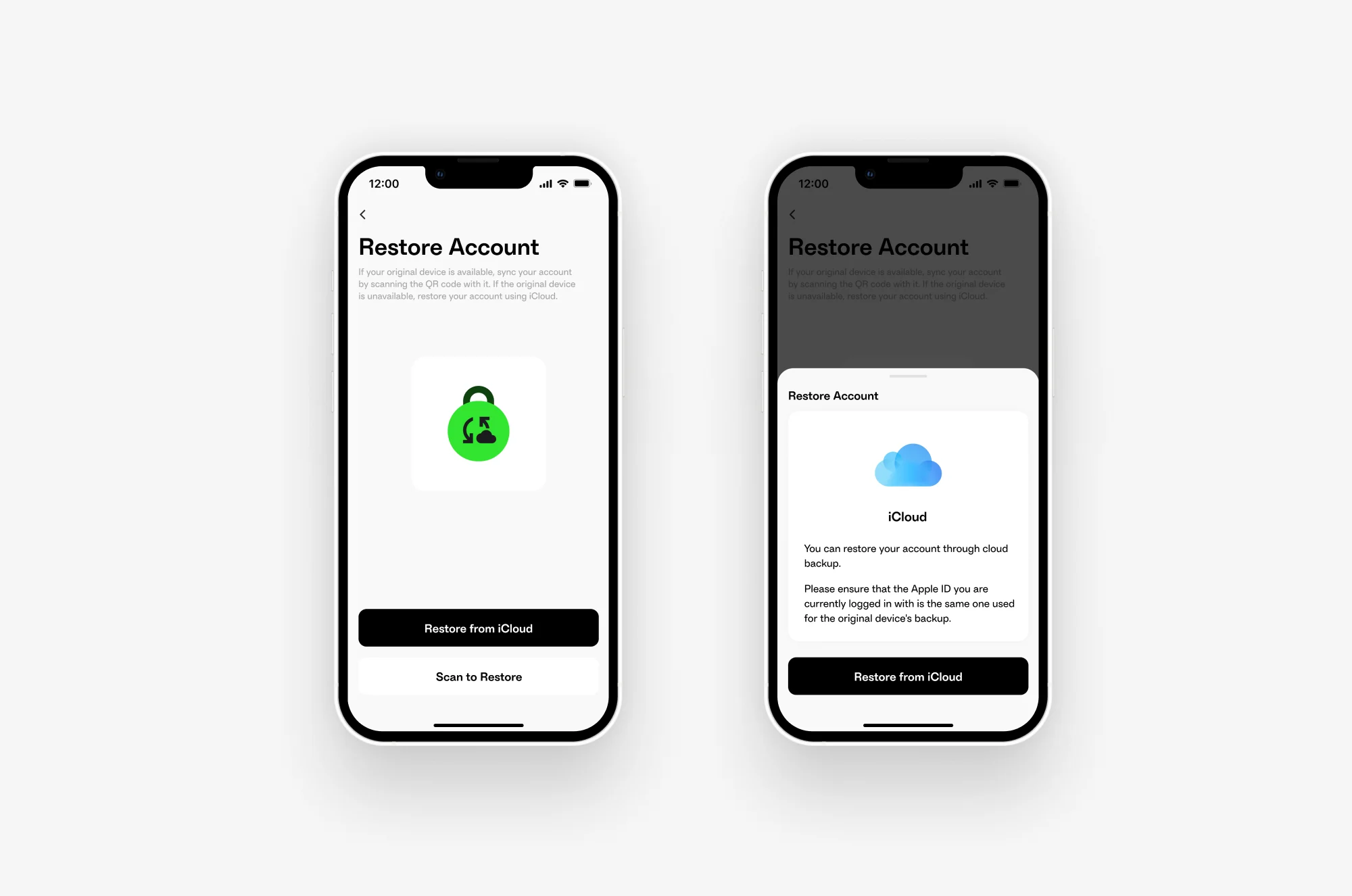
Cloud sync brings it back on a new phone
Only you. Versa can't touch your assets
The seed-phrase risk is gone, but the risk has moved to the cloud account. If a user turns off iCloud Keychain sync, forgets their Apple ID password, or moves from iPhone to Android, the passkey may not sync and the account can't be recovered.
Challenge
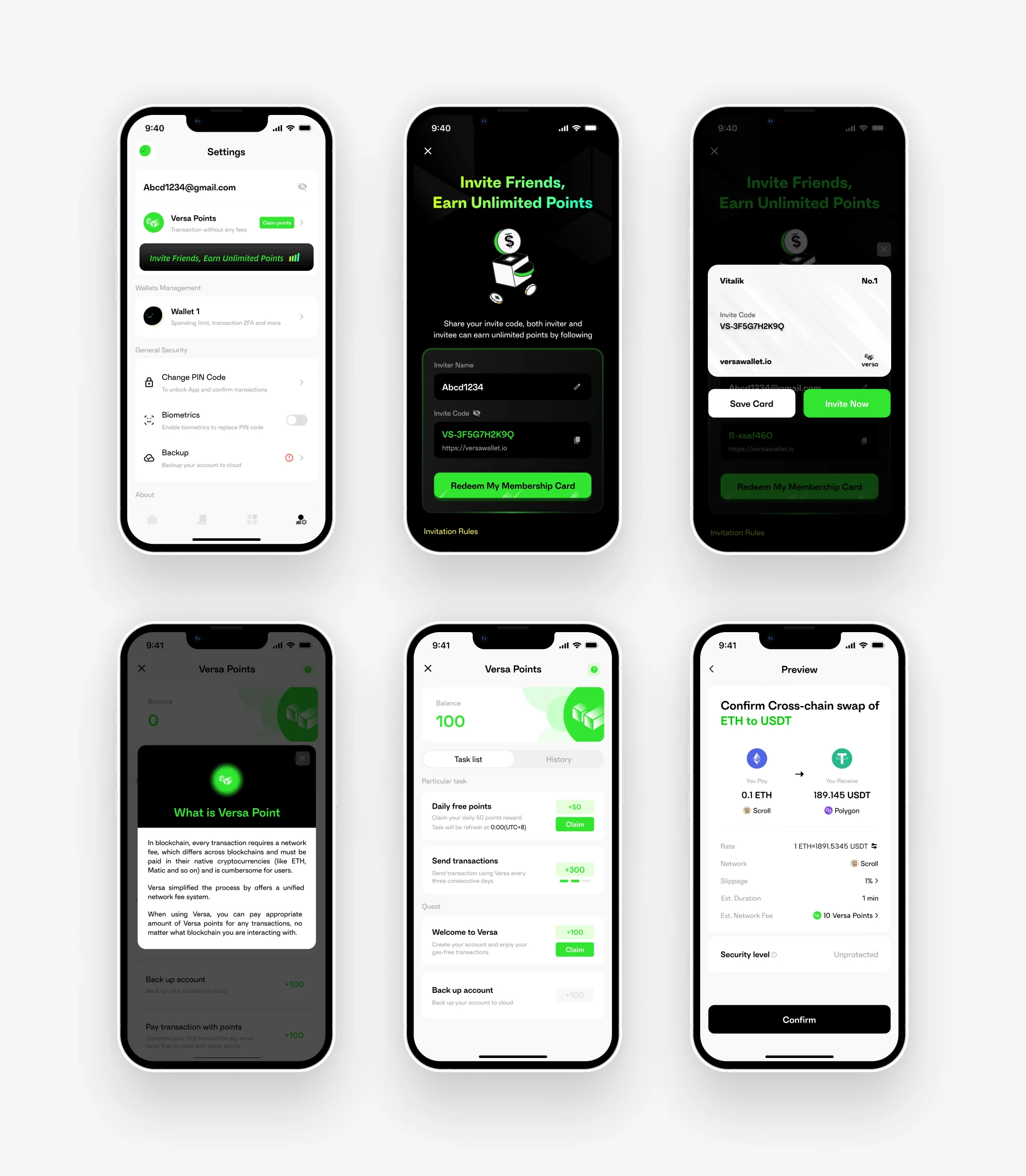
Versa Points: paying network fees with points
Problem
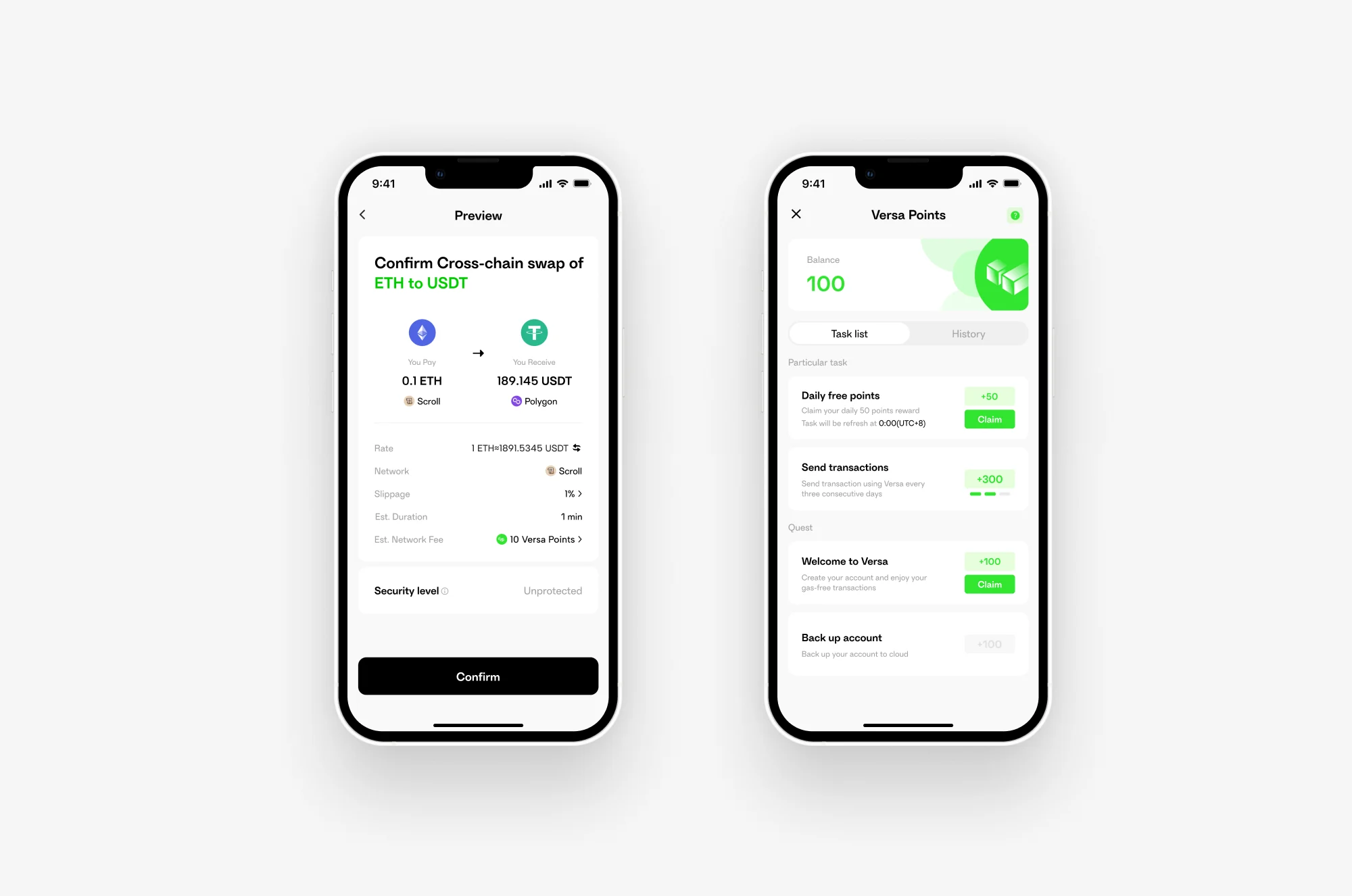
On-chain, every transaction carries a network fee, and the token changes with the chain: ETH on one, MATIC on another. Versa folds all of this into a single kind of points. Users earn them by completing tasks and spend them on transfers, so they no longer need the right token ready on every chain.
Design goals
- Replace the unfamiliar idea of a “network fee” with points people already know
- Give new users points before their first transfer
- Use tasks to walk users through the key actions: backing up the account, setting limits and making the first transfer
Challenge
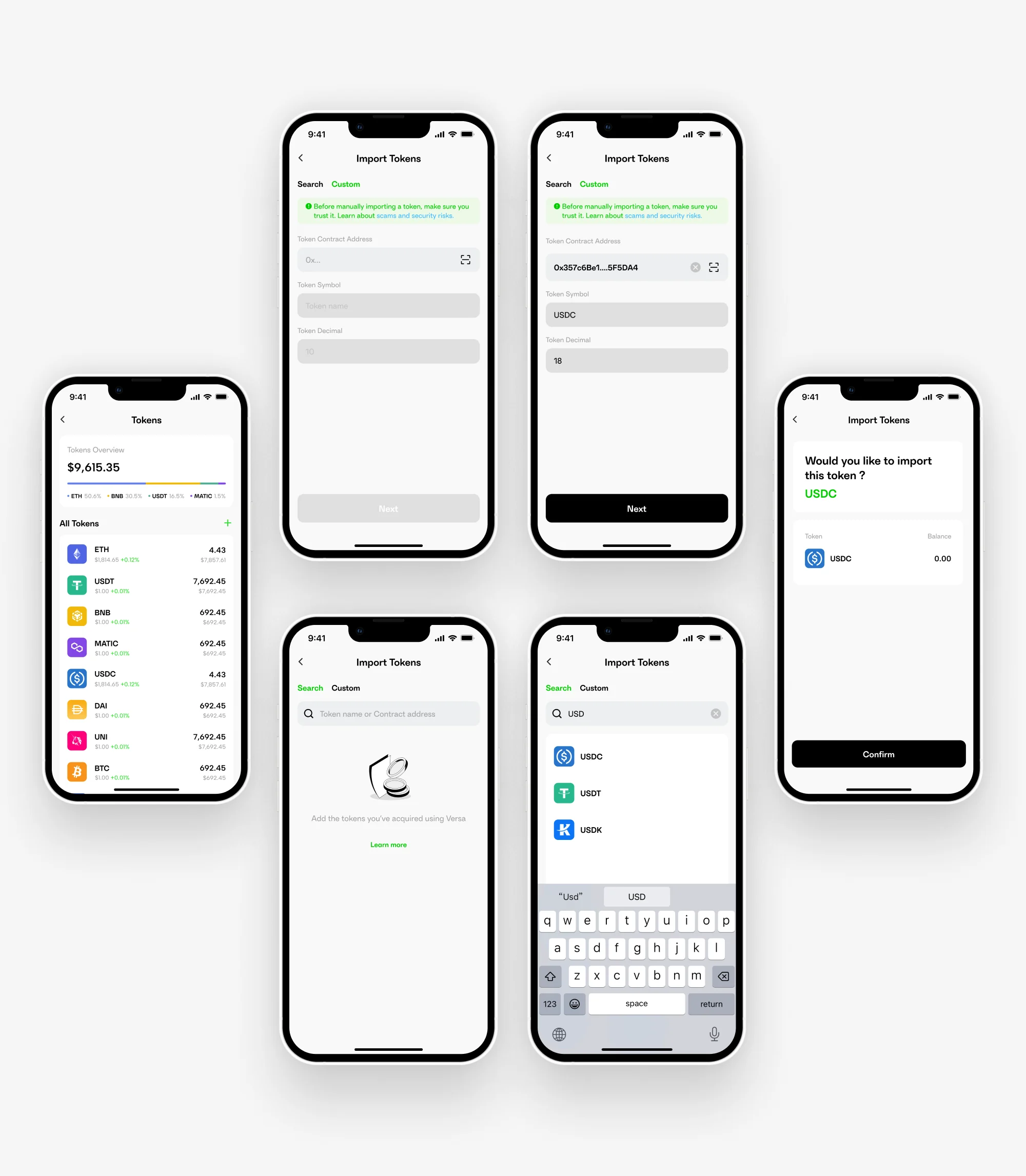
Import Tokens: two ways to bring a token into the wallet
By default the wallet shows only common tokens; any other token stays out of the list even after it arrives. Versa offers two ways to import. Common tokens can be found with search and added in a tap. Anything search can't find is added as a custom token by pasting its contract address.
Challenge
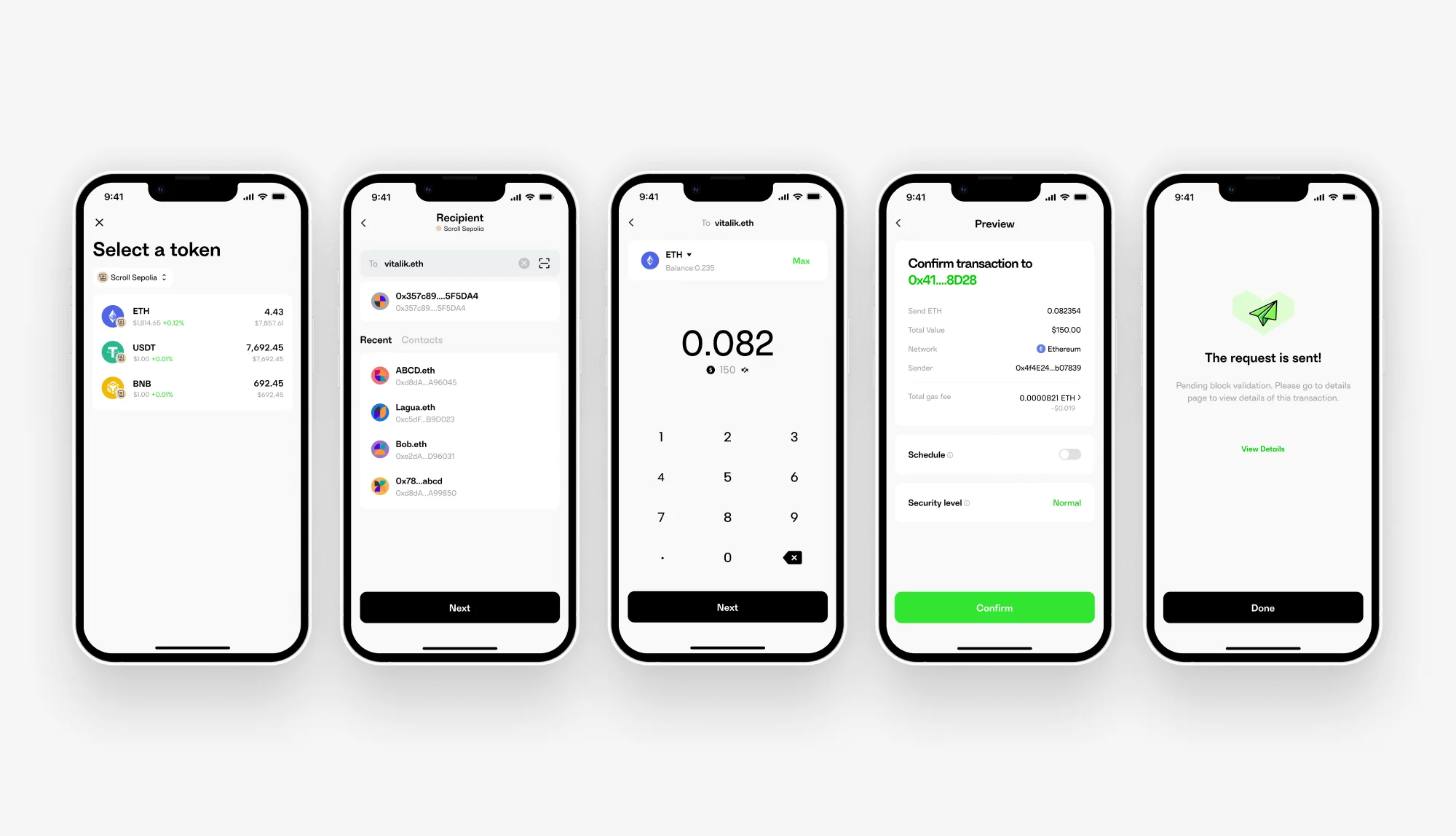
Send
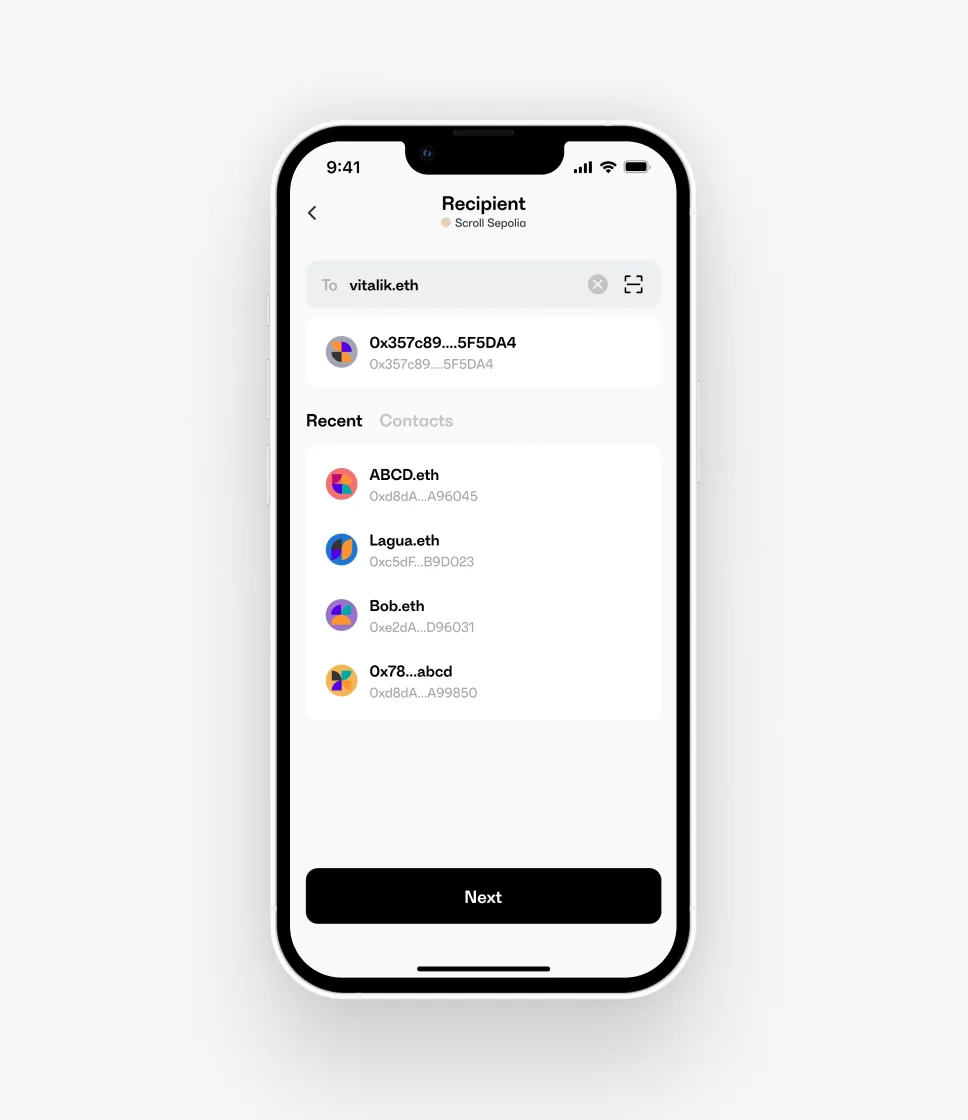
An on-chain transfer means choosing a token, choosing a network, pasting an address and working out the fee, and a mistake at any step can lose the money for good. Versa splits sending into five steps with one decision per screen, and lays out every detail before the user confirms.
Challenge
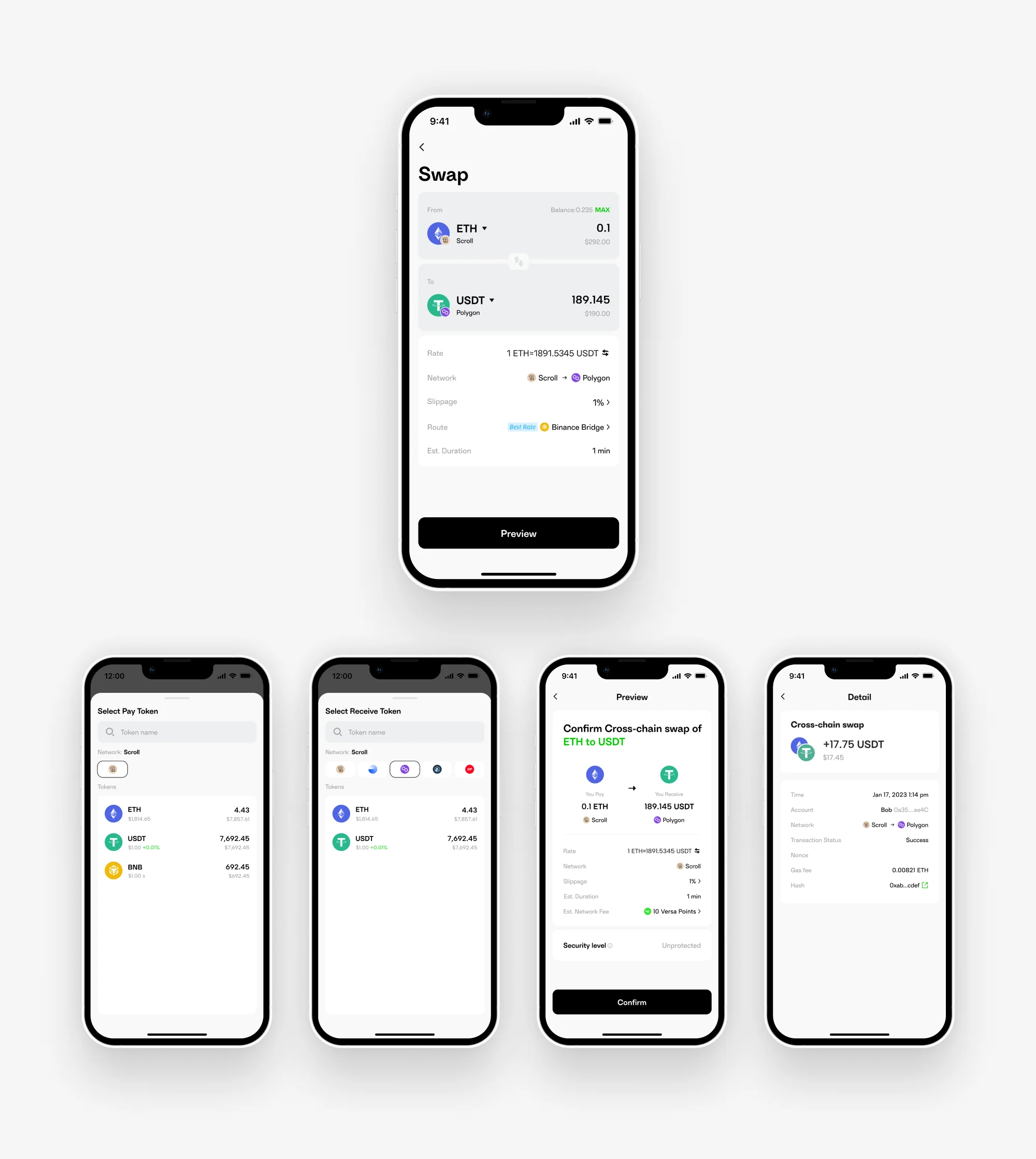
Cross-chain
Problem
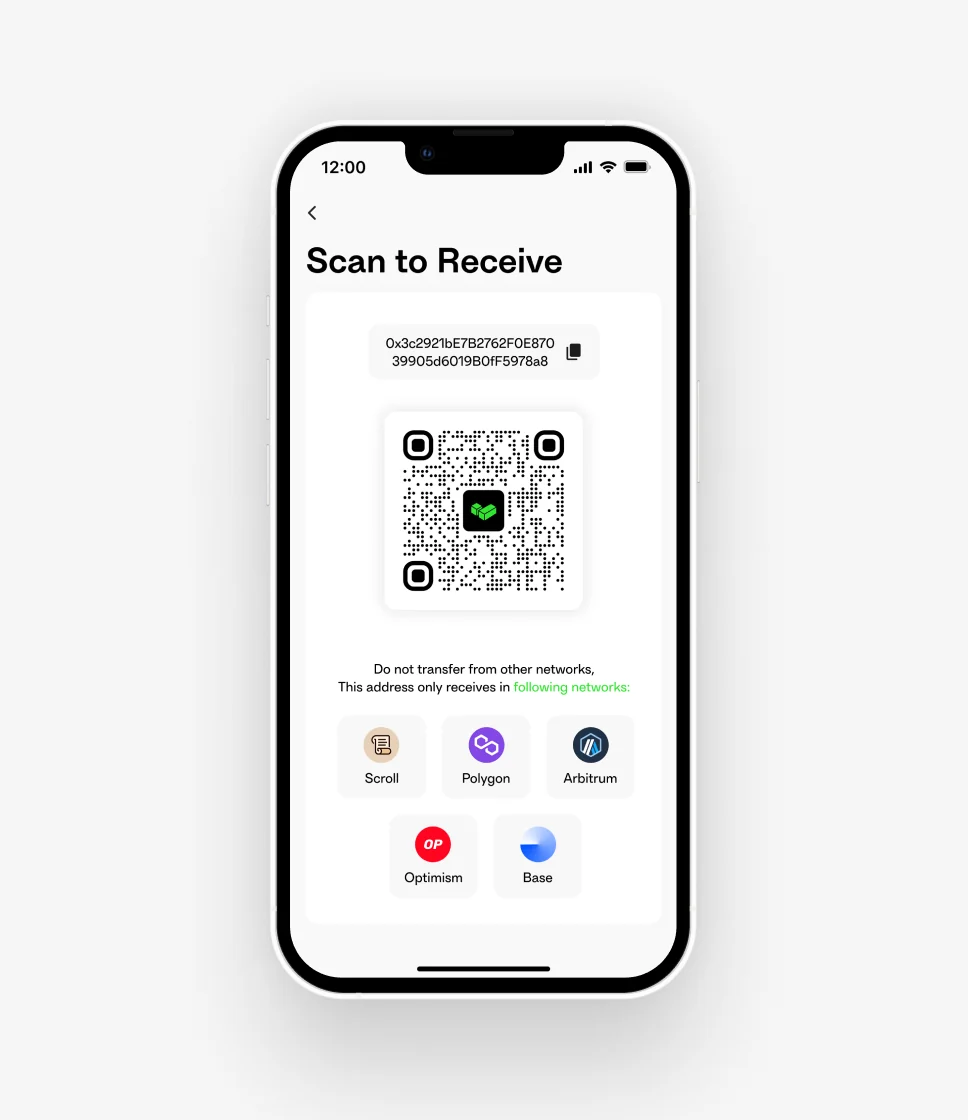
A smart-contract account's address and deployment status can differ from chain to chain. If someone sends funds from a chain Versa doesn't support, the assets may be unrecoverable. Some exchanges also only partly support withdrawals to contract addresses.
Approach
- Tell users plainly that both sending and receiving mean choosing a chain and a token
- Show clearly how the chains relate on the Preview screen
- List every detail involved in the transaction
How to flag cross-chain risk with clear guidance
Final product
A wallet you can trust without learning blockchain first
From creating a wallet to receiving, sending and automated plans, every step shows only the outcome users need to know. Fees, statuses and permissions are explained when they matter, and when something goes wrong, users are told where their assets are and what to do next.
Impact
More accounts created, fewer failed transfers
Expected business impact
- ↑Higher creation completion → more new users make a first deposit
- ↓Fewer gas failures → less churn after the first transfer
- ↑More users add a second recovery method → fewer lost accounts and support requests
Results
69%
New-user wallet creation completion
Completion: 41% → 69%
−83%
First transfers failing for lack of gas
Failure rate: 12.4% → 2.1%
58%
Added a second recovery method within 7 days of the first deposit
Prompted by guidance after the first deposit